
Insights
By
Brad Atkins,
Chief Executive Officer
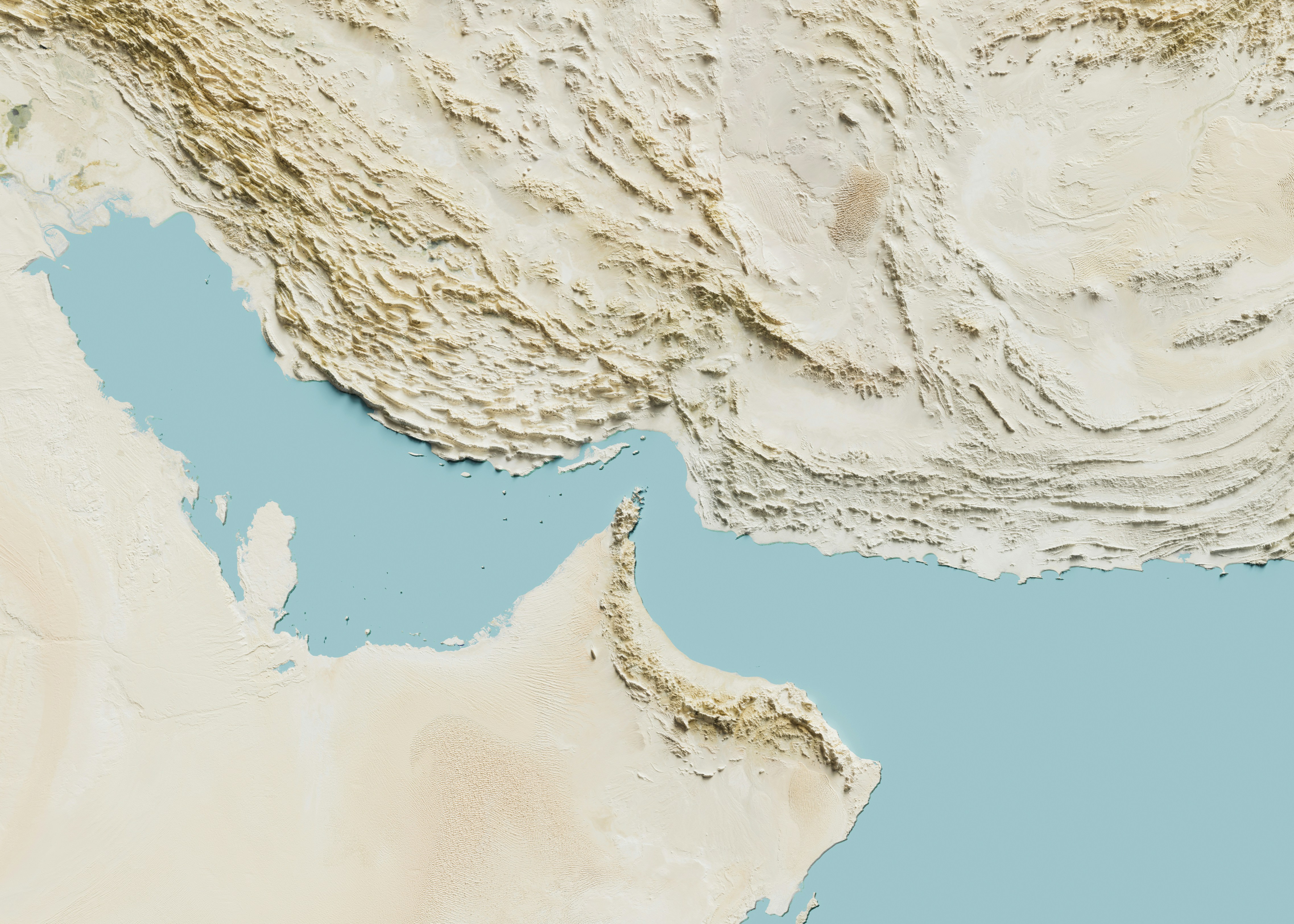
The economic significance of an evolving Middle East conflict will be determined less by the symbolism of escalation than by whether it meaningfully affects energy flows, inflation expectations, and financial conditions.
When Geopolitics Becomes Macroeconomics
Geopolitical crises do not always become economic events. Markets, for good reason, have learned to distinguish between shocks that dominate headlines and those that alter underlying conditions. The distinction matters. A conflict may command global attention without materially changing the path of growth, inflation, or asset prices. But when instability begins to affect the mechanisms through which the global economy actually functions—energy flows, trade routes, capital confidence, and policy expectations—it ceases to be merely political. It becomes macroeconomic.
That is the proper lens through which to view the evolving conflict in the Middle East.
For sophisticated investors, the issue is not the drama of escalation itself. It is whether escalation begins to influence the price and movement of energy, the direction of inflation expectations, and the financial conditions that underpin risk-taking across the global system. Those are the channels through which a regional conflict can become a broader economic force. And those are the variables investors should be watching most closely.
Energy Is the First and Most Important Transmission Channel
The most immediate path from conflict to economic consequence runs through energy. Not every military escalation results in a supply shock, and not every increase in crude prices carries lasting importance. But energy remains the clearest mechanism through which geopolitical disorder can enter the bloodstream of the global economy.
What matters is not only realized disruption, but the emergence of uncertainty around supply security, transportation corridors, insurance costs, and the willingness of market participants to assume normal operating conditions. Energy prices respond not only to lost barrels, but to changing probabilities. When the perceived security of supply deteriorates, the market reprices risk before physical shortages become visible.
For investors, this is the first essential distinction: between a temporary geopolitical premium and a sustained tightening of energy conditions. The former is usually manageable. The latter can reverberate through inflation expectations, corporate margins, consumer sentiment, and policy assumptions in ways that are more difficult to contain.
This is why markets so often focus less on the visible theater of conflict and more on the architecture of energy movement. The question is never simply whether conflict exists. The question is whether the infrastructure of global supply begins to reflect it.
Inflation May Matter More Than Growth, at Least Initially
The present macroeconomic backdrop adds an important layer of complexity. Were this conflict unfolding in a world of stable prices and easy monetary policy, investors might be more inclined to treat it as a contained external shock. But that is not the world we inhabit.
The post-pandemic period has already taught markets that inflation is not merely a statistic. It is a governing condition. It shapes central bank behavior, valuation multiples, real incomes, and the tolerance investors have for uncertainty. In such an environment, a renewed rise in energy prices does not need to be catastrophic to matter. It need only be persistent enough to interrupt the expected path of disinflation.
That is where the consequences become more serious.
A conflict-driven increase in oil or refined product prices would not simply burden households or pressure select industrial sectors. More importantly, it could complicate the policy outlook just as markets are attempting to price a more stable monetary regime. In that sense, the most important effect may not be an immediate collapse in growth, but renewed ambiguity around inflation persistence and the timing of policy normalization.
This is often how geopolitical shocks become economically consequential: not through dramatic contraction, but through a subtler destabilization of the assumptions embedded in interest rates, equity multiples, and cross-asset correlations.
The Second-Order Effects Often Matter Most
It is tempting to focus on direct exposure. Which economies import more energy? Which sectors are most vulnerable to higher fuel costs? Which companies have regional sensitivity? Those questions matter, but they are rarely sufficient.
The more revealing effects are often second-order. Shipping conditions tighten. Insurance costs rise. The U.S. dollar firms on safe-haven demand. Credit spreads widen modestly before growth estimates move at all. Business confidence weakens at the margin. Capital expenditure decisions become more tentative. None of these developments may be decisive on its own. Together, however, they begin to define the macro character of the event.
This matters especially for endowments, family offices, and advisors responsible for long-horizon capital. Such investors should be wary of viewing geopolitical instability through the narrow lens of direct geographic revenue exposure. Modern markets transmit stress quickly and unevenly. A conflict does not need to spread geographically in order for its financial consequences to spread systemically.
For that reason, investors should watch the confirming indicators around the event, not merely the event itself. Oil may capture attention, but breakevens, shipping costs, credit, the dollar, and the shape of rate expectations often tell the deeper story.
Markets Will Price Duration, Not Drama
Financial markets are less interested in the symbolism of escalation than in its likely duration and economic reach. That is why some crises provoke an immediate surge in volatility only to fade within days, while others gradually accumulate significance over weeks or months.
The decisive variable is persistence.
If the present conflict remains episodic, with limited effect on physical supply, maritime transit, and inflation expectations, it will likely resemble many prior geopolitical shocks: unsettling, heavily covered, and ultimately of limited macroeconomic consequence. If, however, it begins to impair energy movement or materially alter the pricing of inflation risk, markets will be forced to reconsider more than headline risk. They will have to reconsider the broader macro regime.
That is a much more consequential development, because regime repricing affects nearly everything at once: discount rates, risk appetite, leadership within equity markets, credit conditions, and the perceived reliability of diversification itself.
For investors accustomed to the view that geopolitical volatility is simply something to be endured rather than interpreted, this distinction is essential. The right question is not whether the market is nervous. It is whether the structure beneath the market is changing.
The Investor’s Task
The appropriate response to an evolving Middle East conflict is neither complacency nor theatrical defensiveness. It is disciplined interpretation.
Serious investors should begin by asking whether their portfolios are more exposed to an inflation surprise than they have assumed. Many allocations remain implicitly constructed around a benign continuation of disinflation, gradual policy normalization, and reasonably cooperative financial conditions. A sustained energy shock would put pressure on each of those assumptions simultaneously.
That does not necessarily argue for abrupt repositioning. It does, however, argue for intellectual honesty about the environment. In periods such as this, the greatest investment error is often not excessive caution, but analytical inertia—the temptation to force new facts into an old framework.
For advisors, the task is to help clients distinguish between noise and structure. For endowments and family offices, the task is broader: to determine whether the event merely interrupts sentiment or begins to reshape the operating backdrop for capital itself. These are different responsibilities, but they arise from the same discipline—understanding which developments are transitory and which begin to alter the terms on which markets clear.
Conclusion
The economic significance of an evolving Middle East conflict will not be determined by rhetoric, headlines, or even the pace of escalation in isolation. It will be determined by whether the conflict begins to affect the systems that connect geopolitics to macroeconomics: energy flows, inflation expectations, financial conditions, and confidence in the continuity of trade.
At present, that is the correct hierarchy of concern. Energy is the first-order variable. Inflation is the second. Financial conditions are the third. If those remain broadly contained, the conflict may prove economically manageable even if politically severe. If they do not, investors may be confronting not simply another period of volatility, but the early stages of a more meaningful repricing of macroeconomic risk.
That is why this moment deserves neither sensationalism nor detachment. It deserves clarity. The task is not to predict every turn in the conflict. It is to recognize, as early as possible, whether a geopolitical event is remaining a narrative—or becoming an economic reality.
Enjoyed this Insight?
Get our market commentary and fund updates sent straight to your inbox.
02
Explore related insights





Disclosure:
© 2026 Morningstar, Inc. All rights reserved. The rating is not a recommendation to buy, sell, or hold the fund. Morningstar does not guarantee its accuracy or completeness and is not responsible for damages or losses arising from any use of this information. The Morningstar Rating™ for funds, commonly called the “star rating,” is a measure of a fund’s risk-adjusted return, relative to similar funds. It is calculated using a Morningstar Risk-Adjusted Return measure that penalizes downward volatility and rewards consistent performance. Ratings are assigned based on a fund’s risk-adjusted performance relative to its Morningstar Category peers over the trailing three-, five-, and ten-year periods (if applicable), and are weighted accordingly.
Investors should consider the Fund’s investment objectives, risks, charges, and expenses before investing. The prospectus, containing this and other information about the Fund, should be read carefully before investing. The prospectus is available at the download icon below or by calling 800-711-9164. Current and future holdings are subject to change and risk.
Investments in the Fund are subject to investment risks, including the possible loss of some or all of the principal amount invested. There is no assurance that the Fund will be successful in meeting its investment objective. The Fund is subject to the following additional risks:
▪ Active Trading Risk: Active trading may result in added expenses, a lower return, and increased tax liability. Since the Fund’s advisor engages in high turnover trading strategies, the Fund will have high portfolio turnover rates.
▪ Closed-End Fund Risk: Closed-end funds (CEFs) are subject to investment advisory and other expenses, which will be indirectly paid by the Fund resulting in duplicative fees and expenses. CEFs are also subject to management risk because the advisor to the underlying CEF may be unsuccessful in meeting the fund’s investment objective.
▪ Equity Securities Risk: Equity securities are subject to changes in value, and their values may be more volatile than those of other asset classes. These changes in value may result from factors affecting individual issuers, industries, or the stock market.
More information about these risks can be found in the Fund’s prospectus.
Vigilant Distributors, LLC., Member FINRA/SIPC. There is no affiliation between Modern Capital Management Co., including its principals, and Vigilant Distributors, LLC.
- No Bank Guarantee
- May Lose Value
- NOT FDIC-INSURED